
ANTHROPOLIS V: Antigone/Epilog
02 Dec, 2026~
26 Dec, 2026
-
Venue
Myeongdong Theater
-
Genre
Theater
-
Show Time
Weekdays 7:30pmㅣSat & Sun 3:00pmㅣNo performance on Tuesday
※ 12.25.(Fri) Christmas 3:00pm -
Tickets
R 60,000KRW | S 45,000KRW | A 30,000KRW
-
Duration
180 minutes
-
Enquiry
1644-2003
Language Korean
* English subtitles will be provided on Thursdays and Sundays. (except 12/13)
Age Restriction Suitable for ages 16 and over
The Bloodstained Myth of Thebes Reaches Its Conclusion
The Grand Finale of the Anthropolis Pentalogy!
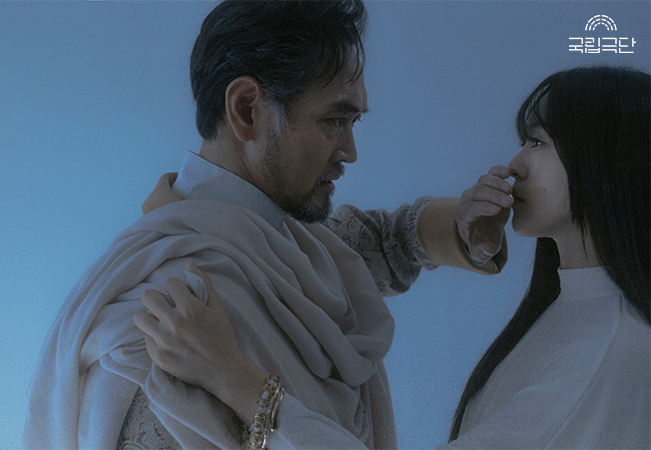
Antigone
: A Name to Be Inscribed at the End of Humanity’s Tragedy Passed Down Like a Divine Curse
With its bold, unconventional productions, the Anthropolis series has taken the Korean theater world by storm. Beginning with the glorious founding of Thebes, the series traces a curse passed down through generations, from Laios to Oedipus and Iokaste, before reaching its conclusion with Antigone. What ending awaits this ancient tragedy, shaped by desire and sin, revenge and death, destruction and violence? The final chapter revisits a mythic tragedy that has traveled across thousands of years, bringing us face to face with the origins that lie buried deep beneath human civilization.

The Timeless Essence of Greek Tragedy
Blossoms Through Lyrical Stage Aesthetics!
Theater director Jung Youngdoo has developed a distinctive artistic vision by moving freely across the boundaries of genre. Roland Schimmelpfennig has reimagined Sophocles’ enduring tragedy Antigone with a contemporary sensibility. In December 2026, this reinterpretation takes on a new theatrical form under the direction of Jung Youngdoo, working with a leading creative team. Drawing on music, movement, and other layers of expression beyond words, the production brings to the surface the imagery beneath a narrative driven by fierce conflict and offers deep emotional resonance.
SYNOPSIS
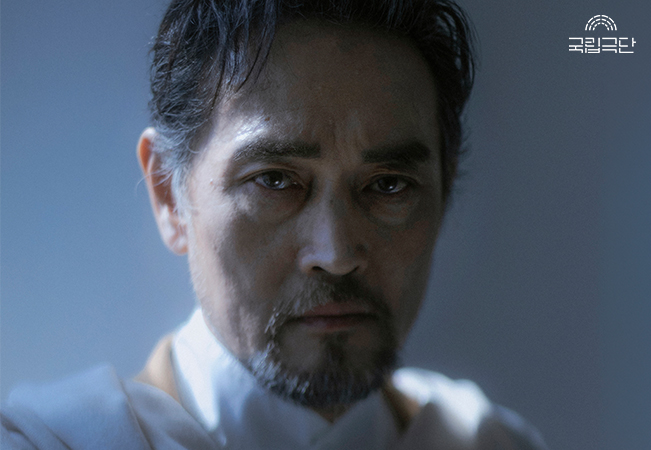
After the war, Creon, King of Thebes, honors only Eteocles as a hero of the two brothers who fell in battle, and forbids anyone to bury the body of Polyneices. Believing that divine law takes precedence over human law, Antigone, daughter of Oedipus, defies the decree and secretly buries her brother’s body. When her act is discovered, she is arrested and brought before Creon. She admits what she has done but declares, “I was born to love, not to hate.” Her younger sister Ismene offers to die with her, but Antigone refuses, insisting that she alone will bear the responsibility. When Haemon, Creon’s son and Antigone’s fiancé, begs his father to pardon her, the two clash bitterly. Creon orders that Antigone be sealed alive in a place beyond the reach of sunlight and left to die. On her way to the tomb, Antigone laments that she is to be the bride only of death. Proud to have obeyed the law of the gods over the law of men, she goes willingly to her death.
The prophet Tiresias appears and warns Creon of the gods’ wrath. Creon dismisses him at first, but as ominous signs multiply, he is seized with regret and rushes to the tomb himself. He is too late. Antigone has hanged herself, and Haemon, upon finding her body, takes his own life with his sword in despair. Creon’s wife, Eurydice, also commits suicide when she learns of her son’s death. Having lost his entire family, Creon is left alone in his palace, now in ruins, bitterly aware of the devastation his stubbornness and arrogance have brought about. The Chorus delivers its final words: “Wisdom is the greatest gift of the gods, and arrogance leads humankind to ruin.”
Written by Sophocles
Celebrated as one of ancient Greece’s three great tragedians, alongside Aeschylus and Euripides, Sophocles wrote some 120 plays, seven of which survive in their entirety. Breaking free from the chorus-centered structure of earlier drama, Sophocles perfected a form of tragedy focused on the inner lives of characters and their ethical conflicts. In plays such as Oedipus the King and Antigone, he explored how human beings make choices and bear responsibility within the divine order, expanding tragedy from a form rooted in religious ritual into an arena of human moral perception. He also introduced a third actor and developed stage design and the dramatic role of the chorus, thereby establishing the structure of classical tragedy. More than 2,400 years later, his plays remain foundational texts that invite reflection on human nature, power, ethics, and belief.
Written by Roland Schimmelpfennig
Born in Göttingen, Germany, Roland Schimmelpfennig is today one of the country’s leading playwrights. After studying theater directing at the Otto Falckenberg School of the Performing Arts in Munich, he went on to work at some of the most prestigious theaters in the world, including the Kammerspiele in Munich, the Schaubühne in Berlin, the Burgtheater in Vienna, and the Volksbühne in Berlin. His plays are performed extensively around the world, and he has received commissions from major international venues in Vienna, Zurich, Copenhagen, Stockholm, Toronto, Tokyo, and beyond. In 2009, his play The Golden Dragon, which he wrote and directed for its world premiere at the Burgtheater Vienna, received the Mülheim Playwriting Award and drew widespread attention. His works presented to Korean audiences include The Golden Dragon, The Woman Before, and Arabian Night.
Adapted, Directed, and Choreographed by Jung Youngdoo
Jung Youngdoo is a choreographer and director whose work explores the nature of human existence and storytelling through physical movement. He began his career as an actor with Hyunjang Theatre Company, broadened his expressive range as a dancer, and later majored in choreography. Drawing on this background, he has worked across theater, dance, multidisciplinary performance, changgeuk, and opera, developing an approach in which language, music, and the energy of the body come together organically onstage. He is known for creating drama through the memories, rhythms, and breath held within the body of a story. In his productions, the performer’s body is more than a means of expression; it serves as a conduit for existence, time, and emotion. As a result, audiences experience far more than the emotional force of a narrative; they encounter the vibrations of living bodies in the “here and now.” His major works include the music theater piece Jeokro: A Song of Dewdrops, the changgeuk Lear, the opera Hwajeonga, and the musical The Man Who Walked Through Walls (2006). Over the years, he has presented an integrated theatrical language in which music and drama, body and space, interlock. By breaking down the boundaries between different genres, Jung continues to create a new performance aesthetic that combines the classical and the contemporary, as well as Eastern and Western sensibilities.
Major Works
Theater: When Ribs Breathe, Do You Like Wine?, Hamlet, Toccata
Dance: Voyage, In the Land of Punctuation, Symphony in C, Fugue, A Seventh Man
Opera: Hwajeonga
Changgeuk: Lear
Music Theater: Knotting the Time, Jeokro: A Song of Dewdrops
Musical: The Man Who Walked Through Walls
Multidisciplinary: Post Apartment, Seeing Red