
![[안트로폴리스Ⅰ] 프롤로그/디오니소스 Poster](/upload/perfMain/25100209145520008525.jpg)
ANTHROPOISⅠ: Prolog/Dionysos
10 Oct, 2025~
26 Oct, 2025
-
Venue
Myeongdong Theater
-
Genre
Theater
-
Show Time
Weekdays 7:30pmㅣSat & Sun 3:00pmㅣNo performance on Tuesday
-
Tickets
R 60,000KRW | S 45,000KRW | A 30,000KRW
-
Duration
180 minutes
-
Enquiry
1644-2003
Language Korean
* English subtitles will be provided on Thursdays and Sundays. (except 10/19)
Age Restriction Suitable for ages 16 and over
The most haunting yet beautiful play of the year!
Greek tragedy is far from over. We are still caught in it.
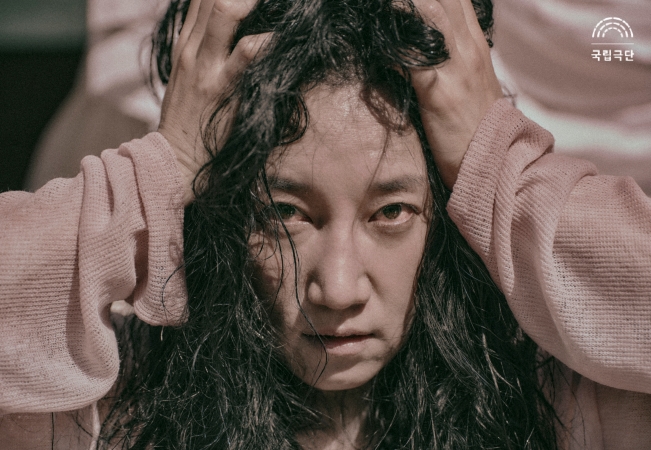
Thebes, a city consumed by madness.
Step across its threshold, and there is no return.
A god appears in Thebes, a city awash in desire and ruin, intoxication and madness.
With each step, Dionysos shatters taboos, engulfing the city in dance and screams.
When shouts of triumph fade into songs of lament, you will be swept into in ecstasy and encounter the ultimate catharsis.
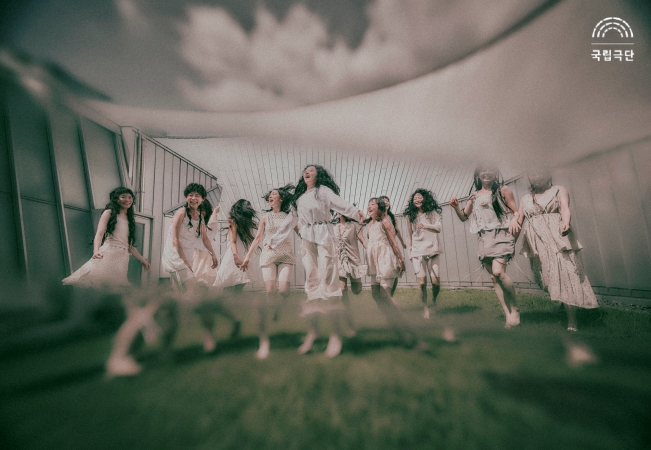
Prolog / Dionysos:
The First Chapter of the Anthropolis Pentalogy
In 2025, the stage of Myeongdong Theater erupts with explosive energy as an incomparable creative team and a remarkable cast of 18 join forces. Director Yoon Hansol, acclaimed for weaving mythic imagination into contemporary tragedy, converges with Roland Schimmelpfennig, the celebrated playwright of The Golden Dragon, whose richly poetic language breathes new life into mythic tragedy. Their partnership elevates this production to unparalleled artistic heights. Scenographer Im Iljin, winner of the 2024 Dong-A Theater Award for Stage Design for Hwal Hwa San, unveils a magnificent stage, while live music captures with precision the intoxicating rhythms of a city in the grip of frenzy. Together, they create one of the most unmissable theatrical experiences of the year.
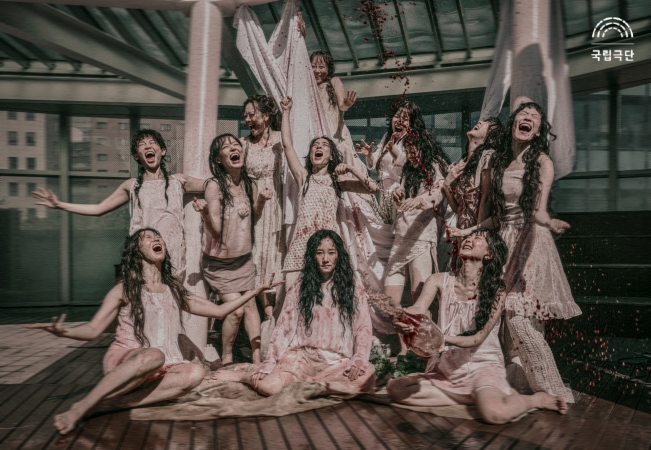
SYNOPSIS
Prolog
Kadmos, with the few who survived from the dragon’s teeth, founds the city of Thebes. And then comes Dionysos, the god twice born.
Europa, daughter of Agenor, king of Phoenicia, is carried off by Zeus in the form of a white bull. Stricken with grief, Agenor sends his three sons to search for her. One of them, Kadmos, travels north to Delphi, where he abandons the search and receives an oracle: follow a cow until it collapses, and there build a city. For three days Kadmos drives the cow until it falls beside a spring. The spring is guarded by a dragon. Kadmos slays the beast, pulls out its teeth, and sows them in the earth. From the teeth spring men, who then turn on one another in battle until only five remain. With these five, Kadmos founds Cadmeia, a city that will one day be called Thebes. In time Kadmos has children of his own. Zeus falls in love with Semele, Kadmos’s daughter, princess of Thebes and sister to Agaue, Ino, and Autonoe. Semele conceives Zeus’s child, but Zeus does not reveal his true form, for any mortal who sees it is consumed by fire. Yet Semele begs him to appear as he truly is. At last Zeus consents. The moment he reveals himself, Semele is burned to ashes. From her womb Zeus rescues the unborn child and sews him into his thigh. Thus is born the god twice born: Dionysos.
Dionysos
Follow Dionysos! Pentheus, who defies worship, is slain by his mother.
Thebes grows into a prosperous city, and Kadmos passes the throne to his grandson Pentheus. Many of the city’s women gather in festivals to honor Dionysos. Pentheus, however, denounces these rites as irrational and forbids them. In response, Dionysos comes to Thebes in disguise, intent on punishing Pentheus for refusing to worship him as a god and on redeeming the dishonor of his mother, Semele. Pentheus confronts the stranger, questions his identity and purpose, and has him imprisoned. Yet Dionysos deceives him, convincing Pentheus to dress as a woman and infiltrate the festival in secret. On the mountain where the Maenads dwell, Pentheus is discovered by his mother Agaue and his aunts Ino and Autonoe. Driven mad, they fail to recognize him. Believing he has mocked Dionysos, they tear him apart. When her senses return, Agaue realizes in anguish that she has killed her own son. She grieves, but Dionysos condemns their crime and drives them into exile.
Written by Euripides
Euripides, alongside Aeschylus and Sophocles, is regarded as one of the three great tragedians of ancient Athens. Of the 92 plays attributed to him, 19 survive, including the satyr play Cyclops. Celebrated for his progressive and original voice, he portrayed human suffering with profound empathy and understanding, while questioning the existence of the gods and exposing the brutal realities of war.
Written by Roland Schimmelpfennig
Born in Göttingen, Roland Schimmelpfennig is recognized as one of Germany’s foremost contemporary playwrights. He studied theater directing at the Otto Falckenberg School of the Performing Arts in Munich before beginning his career at the Munich Kammerspiele and later working other prestigious theaters like the Schaubühne Berlin, the Burgtheater in Vienna, and the Volksbühne in Berlin. His plays have been performed extensively around the world, and he has received commissions from leading theaters in Vienna, Zurich, Copenhagen, Stockholm, Toronto, and Tokyo. In 2009, his play The Golden Dragon, which he also directed, premiered at the Burgtheater in Vienna and won the prestigious Mülheim Playwright Award, bringing him international acclaim. In Korea, his works The Golden Dragon, The Woman Before, and Arabian Night have been introduced to audiences.
Directed by Yoon Hansol
Yoon Hansol has demonstrated remarkable directorial artistry, creating vibrant works that weave whimsical imagination with social messages and aesthetic excellence. In doing so, he has established a distinctive presence and style in the Korean theater scene. His productions, though often unfamiliar and unsettling, become a means of expanding the function of theater and exploring its possibilities. Moving beyond the conventional reproduction of narrative, he juxtaposes diverse discourses and contradictions embedded in texts, continually shaping a unique body of work.
Major Works
<Hwal Hwa San>, <Ankle>, <Extra Chronicles>, <Contemporary>, <Babarian: Killikeido>, <Boy with Bicycle Thief Helmet>, <Self-defense>, <Trees Don’t Visit Shoe Stores>, <Wooden Vessel> <Ansan Pilgrimage>, <Method of Story, Method of Song - Demo Version>, <Crime of Passion>, <1984>, <Brain Surgery>, <Adopted Memories>
Awards
2023 Outstanding play of 27th BESETO THEATRE FESTIVAL Shenzen, China < Trees Don’t Visit Shoe Stores>
2016 Korea Theater Association, Korea Theater Awards 2016 Best 7 Production Revival Category <Ansan Pilgrimage>
2016 Kim Sang-yeol Theater Association, 18th Kim Sang-yeol Theater Award
2013 34th Seoul Theater Festival Young Dramatist of the Year Award <Beautiful Companion>
2012 Korea Theatre Association, 5th Korea Theater Awards Best Production Award <Brain Surgery>
2011 Doosan Yonkang Foundation, 2nd Doosan Yonkang Arts Awards Drama Category